Is an Advanced Diploma in Stock Market Worth It?

Is an Advanced Diploma in Stock Market Worth It?

A practical, no-fluff look at coverage, depth, career value and cost — before you spend on the upgrade. If you’ve spent even ten minutes comparing stock market courses in Mumbai, you’ve hit the same fork in the road: a basic diploma is cheaper and quicker, but the advanced diploma in stock market promises a lot […]

Read More
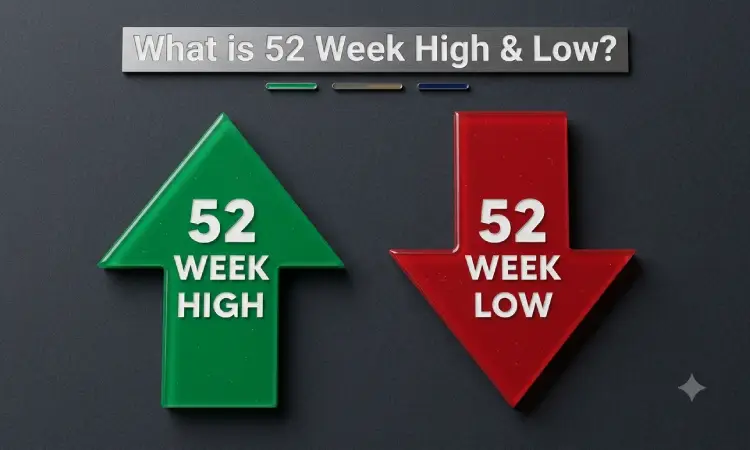
How to Read a Stock Quote: Bid, Ask, Volume and 52-Week High/Low

How to Read a Stock Quote: Bid, Ask, Volume and 52-Week High/Low

Open any broker app and you’re hit with about fifteen numbers, arranged with no explanation whatsoever. Most people learn to read exactly two of them: the big price, and whether it’s green or red. The other thirteen are decoration. They’re not. Several of them will tell you things the big green number is actively hiding. […]

Read More
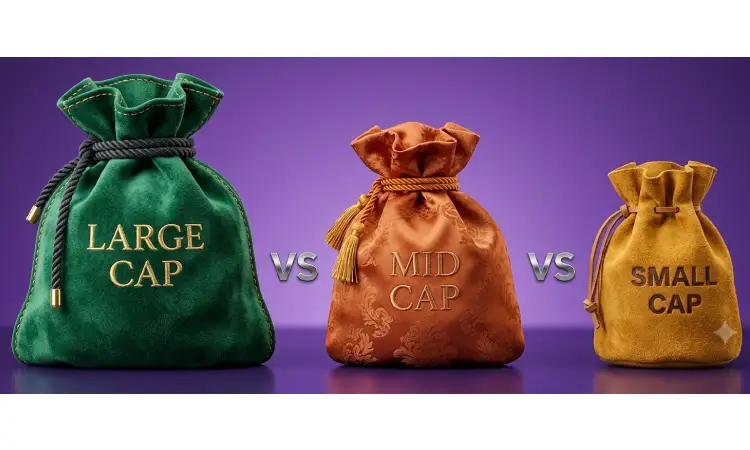
Market Capitalisation Explained: Large-Cap, Mid-Cap and Small-Cap

Market Capitalisation Explained: Large-Cap, Mid-Cap and Small-Cap

In January 2026, Bosch was promoted from mid-cap to large-cap. Six months later, in July 2026, it was demoted back to mid-cap. So was Hero MotoCorp — same round trip, same six months. Did Bosch shrink? Did it become a worse company, then a better one, then a worse one again? No. Nothing about the […]

Read More
stock Split

Stock Splits and Bonus Issues: How They Affect Your Holdings

You wake up, open your app, and your holding has doubled. 100 shares became 200. Free shares. From the company. For nothing. You made exactly ₹0. Because the price halved at the same moment. Same money, more pieces. It’s a pizza cut into eight slices instead of four — you are not holding more pizza. […]

Read More
Primary vs Secondary Market: From IPO to the Stock Exchange

Primary vs Secondary Market: From IPO to the Stock Exchange

Here’s a question that trips up almost everyone who’s new to the market. You open your app and buy ₹50,000 worth of shares in a big listed company. Where does your ₹50,000 go? Most people assume it goes to the company. It doesn’t. The company doesn’t see a single rupee of it. Your money goes […]

Read More
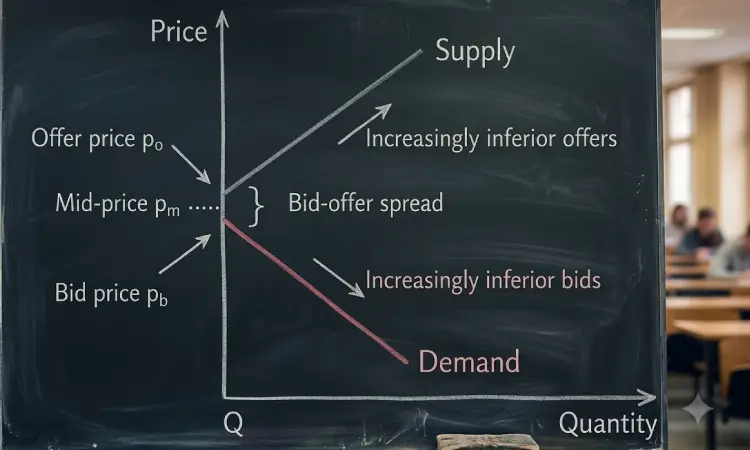
Supply, Demand and the Order Book

How Stock Prices Are Determined: Supply, Demand and the Order Book

Ask most people why a stock went up and you’ll hear something like: “the company posted good results.” That answer isn’t wrong, exactly. But it skips the entire machine in the middle. Good results don’t move a price. People reacting to good results move the price — and they do it through a specific, mechanical, […]

Read More
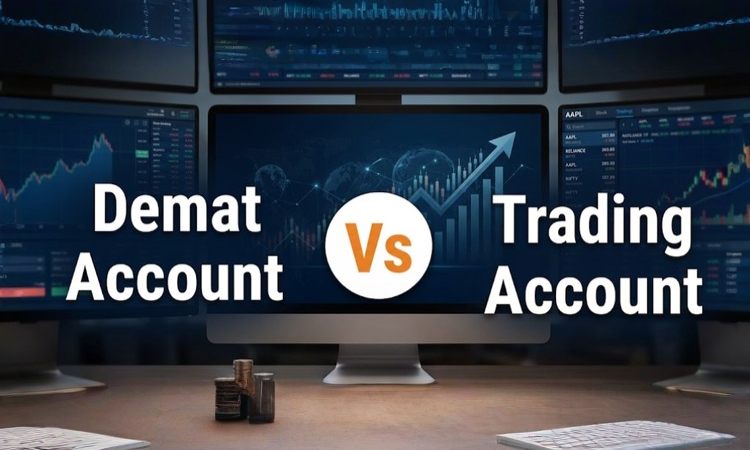
Demat vs Trading Account: What’s the Difference and Why You Need Both

Demat vs Trading Account: What’s the Difference and Why You Need Both

When comparing a trading account vs demat account, here’s the short version: a Demat account holds your shares in electronic form, while a Trading account is used to buy and sell those shares on the stock exchange. Both accounts are mandatory to invest in the Indian stock market — your Trading account places the order, […]

Read More
What is SEBI and How Does it Protect Indian Investors?

What is SEBI and How Does it Protect Indian Investors?

SEBI — Securities and Exchange Board of India — is the statutory regulatory body that oversees and regulates India’s securities market. Established in 1992, SEBI’s primary role is to protect the interests of investors, promote the development of the securities market, and regulate all market participants including brokers, stock exchanges, mutual funds, and listed companies. […]

Read More
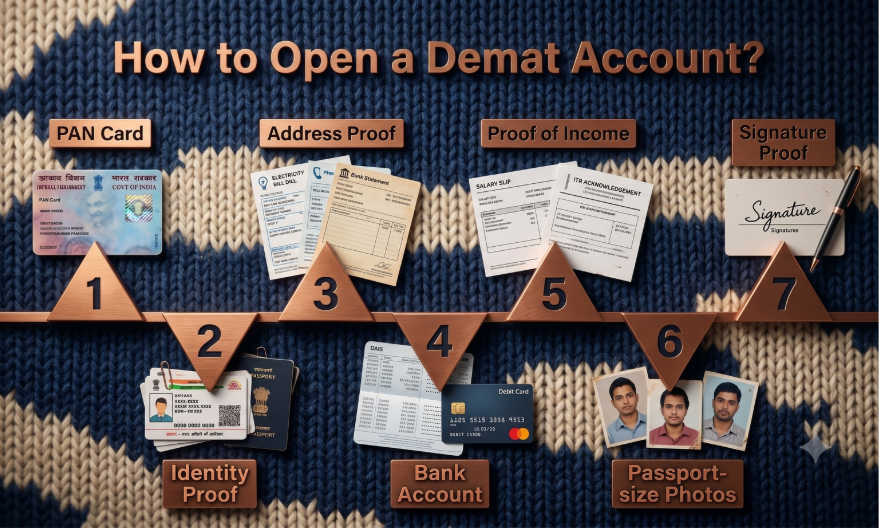
How to Open a Demat Account in India: Documents, Process and Charges

How to Open a Demat Account in India: Documents, Process and Charges

To open a Demat account in India, you need a PAN card, Aadhaar card, a bank account, and a passport-size photograph. The process is fully online through your chosen broker’s website or app — complete eKYC using Aadhaar OTP, upload your documents, and your account is activated within 24 to 48 hours. Opening a Demat […]

Read More