
From Homemaker to Independent Investor: A Beginner’s Roadmap to the Stock Market
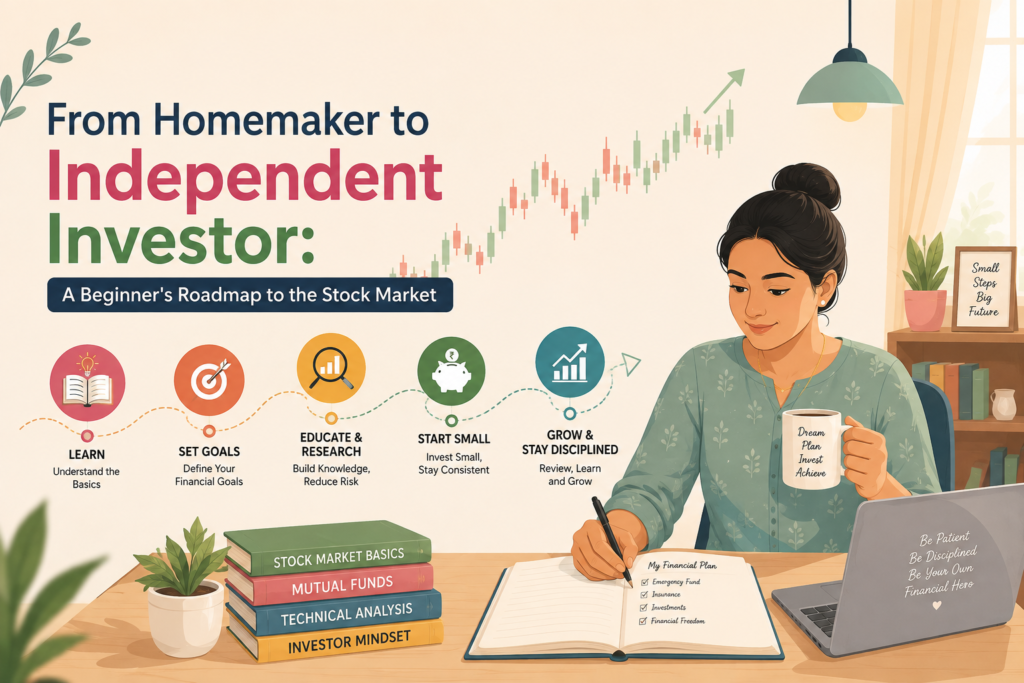
Managing a household budget, planning for school fees, stretching monthly savings to cover the unexpected — these are financial skills homemakers already have, often without recognising them as such. The stock market simply asks you to apply that same discipline to a different kind of decision. It’s not a men-only, screen-all-day domain — and more homemakers are proving that every year.
Why This Is a Realistic Path, Not Just a Nice Idea
Upside’s own admission criteria explicitly welcome housewives and homemakers as one of the groups the Diploma in Stock Market is built for, alongside students, working professionals, and retired individuals. That’s not a marketing line — it reflects something genuinely true about who succeeds at learning the market: patience, consistency, and careful decision-making matter far more than any prior finance degree.
If you’ve ever managed a household’s monthly expenses against a fixed income, you’ve already practised budgeting, prioritising, and planning for shortfalls — the exact instincts that make for a disciplined investor.
What Makes This Path Different From “Trading for a Living”
It’s worth separating two very different goals early on, because they need different approaches:
- Building a second income stream through investing — steady, long-term, lower time commitment
- Active trading — requires more daily screen time, faster decision-making, and a higher risk tolerance
Most homemakers starting out are better served by the first path initially, even if they explore trading later once they’re comfortable with how markets behave. There’s no rule that says you need to trade daily to benefit from the stock market.
Where to Actually Start
1. Learn the Basics Properly, Not Through Guesswork
Understanding what a Demat account is, how the NSE and BSE function, and what SEBI’s role is might sound dry, but it’s the foundation everything else is built on. Skipping this step is exactly how well-meaning beginners end up following random tips instead of understanding what they’re actually doing.
2. Start With Investing Concepts Before Trading Concepts
- Understanding SIPs (Systematic Investment Plans) and how consistent, smaller investments compound over time — a concept we cover in detail in SIP vs Lump Sum: What the Data Actually Shows
- Learning to read a company’s basic financial health before investing in it, rather than buying because a stock is “trending”
- Getting comfortable with order types — the difference between a market order and a limit order matters more than it sounds, as explained in Order Types Explained
3. Build a Routine That Fits Around Your Day
You don’t need to watch the market all day to be a serious investor. A structured routine — checking your portfolio a few times a week, following a small number of companies closely rather than the entire market — is realistic and effective for someone managing a household alongside their learning.
4. Learn Technical and Fundamental Analysis at Your Own Pace
Once the basics feel comfortable, technical analysis (reading charts and price patterns) and fundamental analysis (evaluating company financials) round out your ability to make informed decisions rather than emotional ones. Neither requires a finance background — both are teachable skills.
Common Concerns, Addressed Honestly
“I don’t have a finance background — is that a problem?”
No. The Diploma in Stock Market is built to start from zero, assuming no prior market knowledge.
“Will I need to sit at a screen all day?”
Not necessarily. Investing-focused strategies need far less daily time commitment than active intraday trading.
“What if I make a mistake with real money?”
Every investor does, early on. Structured learning — with mock practice and guided classes before you commit significant capital — reduces how costly those early mistakes are.
“Is this really something I can do alongside managing a household?”
Yes, and it’s precisely why Upside offers both classroom and online formats — flexibility matters when you’re balancing multiple responsibilities.
A Realistic First Step
You don’t need to overhaul your life or “become a trader” overnight. A good starting point is a structured, beginner-friendly course that builds your understanding step by step. Upside’s Diploma in Stock Market is a 4-month program designed for exactly this kind of beginner, available at both the Dadar and Thane branches, with online options if attending in person isn’t practical for your schedule.
Frequently Asked Questions
Can homemakers really learn stock market investing without a finance background? +
Yes — Upside’s Diploma in Stock Market is specifically designed to start from the basics, and household financial management skills like budgeting and planning translate well into disciplined investing.
Do I need to trade every day to benefit from the stock market? +
No. Long-term, investment-focused approaches require far less daily time commitment than active trading, and are often a better starting point for beginners.
What should I learn first — trading or investing? +
Investing concepts, like SIPs and basic company evaluation, are generally a gentler and more sustainable starting point than active trading strategies for most beginners.
Are online classes available for homemakers who can’t attend in person? +
Yes, Upside offers both classroom training at its Dadar and Thane branches and online course formats, so you can choose whichever fits your schedule.
How much time does the Diploma in Stock Market course take? +
It’s a 4-month program, covering market fundamentals, technical analysis, fundamental analysis, and risk management at a structured, beginner-friendly pace.
Your First Step Doesn’t Have to Be a Big One
Learning the stock market is a skill you build gradually, not a leap you take all at once. Explore the Diploma in Stock Market or reach out to our counselling team to talk through what a realistic starting point looks like for you.