
What Changed Under SEBI’s 2026 Stock Broker Regulations
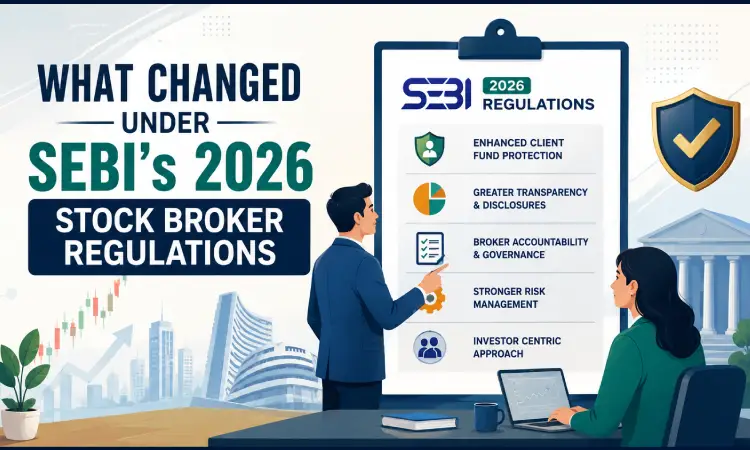
A Rulebook That Hadn’t Changed Since 1992
Think about how different the stock market looked in 1992. No internet trading. No demat accounts. No apps on your phone placing orders in milliseconds. Yet the regulations governing your broker were written for that world — and stayed largely unchanged for 33 years, even as the market around them transformed completely.
That gap finally closed on 7 January 2026, when SEBI notified the Stock Brokers Regulations, 2026, fully repealing the 1992 framework. This isn’t a minor update or a few added clauses. It’s a structural reset of how brokers are registered, governed, and held accountable — and a lot of it directly affects how safe your money and your trades actually are.
Why This Reset Mattered
The 1992 rules were built for a market of paper contracts and physical trading floors. Over three decades, SEBI patched the gaps with circulars, exchange by-laws, and supervisory directions — a workable but scattered system, with individual obligations spread across dozens of separate documents instead of one clear rulebook.
The 2026 Regulations consolidate all of that into a single, modern framework — covering registration, governance, client asset protection, cyber security, conduct, and compliance under one roof. The goal, as SEBI put it, is straightforward: shift from trusting brokers to behave well, to designing rules that make bad behavior harder to get away with and easier to catch.
For you as an investor, that shift matters more than the legal mechanics behind it.
What Actually Changed for Brokers
A few changes stand out as the backbone of the new framework.
Client Money Gets a Harder Wall Around It
This is the single most investor-relevant change in the entire framework. Brokers are now required to strictly segregate client funds and securities from their own accounts — a rule that previously existed only loosely across circulars, not as a codified, enforceable regulation.
In practice, this means your money and shares held with a broker are meant to be clearly separated from the broker’s own operating funds at all times, with proper books, bank accounts, and depository records reflecting that separation. This directly addresses a vulnerability that’s caused real damage in the past — cases where a broker’s financial trouble ended up affecting client assets that should never have been at risk in the first place.
Every Broker Needs a Named, Accountable Person
Every broker must now designate at least one director who is resident in India for a minimum of 182 days a year. That director is personally tied to the firm’s compliance and governance — no more operating through structures where accountability is diffuse or hard to pin on anyone specific.
Standardized Agreements and Statements
Brokers must issue standardized client agreements and periodic account statements, along with maintaining accurate books, records, and full audit trails for every transaction. If you’ve ever struggled to understand your own broker’s paperwork or wondered whether your statement told the full story, this is designed to close that gap over time.
Stronger KYC, AML, and Risk Controls
The new rules formally require brokers to maintain robust Know Your Customer (KYC), anti-money laundering, and counter-terrorism financing compliance, alongside internal risk management and compliance systems built to detect misuse of client assets or suspicious trading patterns early — not after the damage is done.
No More Cash Dealings Outside the System
The regulations explicitly prohibit brokers from accepting cash from clients outside proper regulatory channels. It sounds like a small detail, but it closes a door that’s historically been used to obscure where money actually came from or went.
Fair Communication, No Misleading Claims
All communication to clients — about risk, about returns, about anything — must now be fair, accurate, and not misleading. This applies directly to how brokers and their partners can market products, strategies, or expected returns to you.
What This Means for You as an Investor
Strip away the legal language, and here’s what actually changes on your end:
- Your funds are structurally safer. Segregation isn’t just a best practice anymore — it’s a codified, enforceable requirement with real consequences for brokers who don’t comply.
- Accountability has a face. A resident, designated director means there’s always someone in India personally responsible for the firm’s compliance — not a distant entity you can’t reach.
- Your statements should get clearer. Standardized formats mean less ambiguity about what you actually hold and what you’re actually paying.
- Misleading pitches carry more regulatory risk for brokers. If a broker or their partner promises unrealistic returns, that’s now a direct violation of the conduct rules, not just bad practice.
- Existing brokers have a transition window. Firms were given up to six months from notification to meet certain requirements, like appointing a compliant resident director — so some of this rolled out gradually through mid-2026 rather than overnight.
None of this requires you to do anything differently. But it’s worth knowing, because a broker’s compliance with this framework is now a meaningful signal of how seriously they treat your money — not just a piece of fine print.
Part of a Bigger Pattern
This reset didn’t happen in isolation. It arrived alongside SEBI’s tightened F&O trading rules aimed at curbing retail speculation, and its new algo trading framework requiring every automated order to carry a traceable Strategy ID. Together, these three moves tell a consistent story: SEBI is rebuilding market infrastructure for a much larger, much more digital retail base than the one the rules were originally written for.
If you’ve read our piece on the algo trading rules, this is the regulatory backdrop it sits inside — a broker ecosystem being rebuilt for accountability from the ground up.
The Real Takeaway
A rulebook from 1992 was never going to keep pace with a market run through apps, APIs, and millions of new retail accounts. The 2026 Stock Broker Regulations close that gap — not by giving you new rights to exercise, but by making sure the people holding your money and executing your trades are held to a standard that finally matches how the market actually works today.
Understanding regulations like this isn’t just background reading — it’s part of knowing how the market you’re trading in is actually built, and what protections you genuinely have versus what you’re assuming. If you want to build that kind of ground-up market literacy properly, Upside’s stock market courses cover exactly this — the mechanics, the regulatory framework, and the practical trading skills that sit on top of it.
Frequently Asked Questions
When did the SEBI Stock Brokers Regulations, 2026 come into effect? SEBI notified the new regulations on 7 January 2026, replacing the SEBI (Stock Brokers) Regulations, 1992 with immediate effect, though certain provisions like the resident director requirement carried a six-month transition window for existing brokers.
What is the most important change for retail investors? The mandatory, codified segregation of client funds and securities from a broker’s own accounts — a rule that previously existed only loosely across circulars and now carries direct regulatory enforcement.
Does this mean my broker was unsafe before 2026? Not necessarily. Many of these obligations existed informally through circulars and exchange rules. The 2026 framework consolidates and strengthens them into one enforceable regulation, closing gaps that existed in how consistently they were applied.
What is a “designated director” requirement? Every broker must now have at least one director who resides in India for at least 182 days a year, personally accountable for the firm’s governance and compliance.
Is this related to SEBI’s algo trading rules? Yes — both are part of the same broader 2026 regulatory overhaul aimed at modernizing market infrastructure and accountability, alongside tightened F&O trading rules for retail speculation.
Do I need to do anything as an investor because of this change? No direct action is required from you. It’s worth being aware of these protections when evaluating a broker, but the compliance obligations sit entirely with the broker, not with you.