
How to Analyse an IPO Before Investing: A Beginner’s Checklist
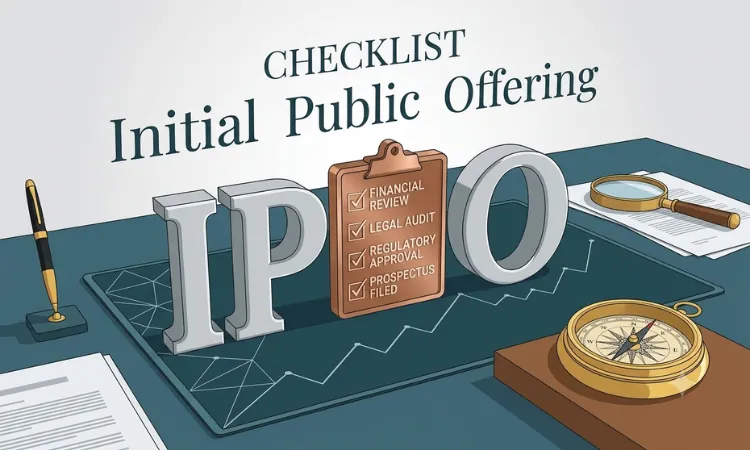
IPO season has a way of creating noise. Subscription numbers flash “42x Oversubscribed,” grey market premium (GMP) figures circulate in WhatsApp groups, and it suddenly feels like everyone except you knows something. Most retail investors end up applying based on hype rather than any real understanding of the business they’re about to own a piece of.
The good news: analysing an IPO isn’t complicated once you know what to actually look for. This guide walks through the same checklist that a trained analyst would use — in plain language, with no finance degree required.
What Is an IPO, Quickly
An Initial Public Offering (IPO) is the process through which a private company sells shares to the public for the first time and gets listed on a stock exchange like the NSE or BSE. Companies do this mainly to raise capital — for expansion, debt repayment, or working capital — while early investors and promoters often use it as a partial or full exit route.
That last point matters: an IPO is also often the seller’s best possible sales pitch for the company. Your job as an investor is to look past the pitch and into the numbers.
Step 1: Read the DRHP (Yes, Actually)
Every company launching a mainboard IPO in India files a Draft Red Herring Prospectus (DRHP) with SEBI — a detailed document covering the business, financials, risk factors, and how the IPO proceeds will be used. It’s freely available on the SEBI website and the stock exchanges’ portals.
Nobody expects you to read all 300+ pages cover to cover, but three sections are worth your time:
- Risk Factors — this is where companies are legally required to disclose what could go wrong, and it’s often far more revealing than the glossy business overview
- Objects of the Issue — tells you exactly what the company plans to do with the money it raises
- Financial Statements — the actual revenue, profit, and debt numbers, not the summarised version in news articles
If a company can’t clearly explain, in one line, what problem it solves and how it makes money, that’s worth pausing on before you go any further.
Step 2: Understand the Business Model and Industry Position
Before touching a single ratio, ask:
- What does this company actually sell, and to whom?
- Is the industry growing, mature, or shrinking?
- Who are the listed competitors, and how does this company compare on scale and profitability?
- Is the business model easy to replicate, or does it have a real moat (technology, brand, regulatory licence, distribution network)?
A business you can’t explain in a sentence is a business you probably shouldn’t be pricing in a spreadsheet.
Step 3: Check the Financials and Valuation Ratios
This is the core of IPO analysis. At minimum, look at:
- Revenue and profit trend — consistent growth over 3–5 years is far more reassuring than one good year
- Debt-to-equity ratio — high debt increases risk, especially for capital-intensive businesses
- Return on Equity (ROE) — how efficiently the company uses shareholder money to generate profit
- P/E (Price-to-Earnings) ratio — compares the IPO price to earnings; always benchmark against listed peers in the same sector, not in isolation
- P/B (Price-to-Book) ratio — more relevant for financial companies like banks and NBFCs
- EV/EBITDA — useful for capital-intensive sectors such as manufacturing or telecom
None of these ratios mean much on their own. The real test is comparison: if the IPO is priced well above its listed peers without a clear reason (faster growth, better margins, a genuine competitive edge), that’s a valuation red flag, not a growth story.
Step 4: Look at Promoter and Management Background
A company is only as good as the people running it. Check:
- Promoter shareholding pattern before and after the IPO — heavy promoter selling (an “Offer for Sale”) versus fresh capital raised for the business can tell you a lot about intent
- Management’s track record, including any prior ventures, litigation, or regulatory issues
- Related-party transactions disclosed in the DRHP, which can sometimes mask conflicts of interest
Step 5: Read the Risk Factors Section Properly
It’s tempting to skip this section, but it’s where companies disclose genuine vulnerabilities: customer concentration, pending litigation, regulatory dependency, currency exposure, or reliance on a small number of suppliers. A long, generic risk section is normal — a specific, material risk buried in paragraph 40 is the one that matters.
Step 6: Understand Subscription Data and GMP — But Don’t Chase Them
Two numbers dominate IPO conversations in the final days before listing:
- Subscription status — how many times the offered shares have been bid for, broken down by retail, HNI, and institutional (QIB) investors. Strong QIB and HNI participation is generally a more meaningful signal than retail enthusiasm alone.
- Grey Market Premium (GMP) — an unofficial, informal indicator of the premium buyers are willing to pay over the issue price in an unregulated grey market, before listing.
Both are useful as sentiment indicators, not investment theses. GMP in particular is unregulated, can be manipulated, and has been wrong often enough that treating it as a guarantee of listing gains is a common and costly mistake.
Step 7: Decide Your Objective — Listing Gain or Long-Term Hold
Your analysis priorities shift depending on what you’re actually trying to achieve:
- For a listing-gain approach: subscription trends, GMP, and overall market sentiment carry more weight — though this is inherently speculative and can go wrong quickly if broader markets turn volatile
- For a long-term investment: focus almost entirely on business fundamentals, valuation versus peers, and growth runway, and largely ignore short-term sentiment noise
Being clear about which one you’re doing — before you apply — prevents a lot of after-the-fact regret.
A Quick IPO Analysis Checklist
Before you apply, you should be able to tick most of these:
☐ I can explain the business model in one sentence
☐ Revenue and profit have shown reasonably consistent growth
☐ Debt levels are manageable for the sector
☐ Valuation (P/E, P/B, or EV/EBITDA) is reasonable versus listed peers
☐ Promoter and management background checks out
☐ I’ve read the Risk Factors section, not just the summary
☐ I understand what the IPO proceeds will actually fund
☐ I know whether I’m investing for listing gains or the long term
If you’re ticking fewer than half of these, that’s a sign to slow down rather than a reason to apply anyway “just in case it lists well.”
Common Mistakes Retail Investors Make
- Applying purely because GMP looks attractive, without reading a single financial statement
- Treating high subscription numbers as proof the business is good, rather than proof the issue is popular
- Ignoring the “Objects of the Issue” — if most of the money is an Offer for Sale benefiting existing shareholders rather than the company itself, growth capital may be limited
- Comparing valuation to hype-driven, unlisted “unicorn” stories instead of actual listed peers
- Investing an amount they can’t hold through volatility if listing gains don’t materialise
Where This Fits Into Your Learning
Reading a DRHP, comparing valuation ratios, and separating signal from noise in subscription data are exactly the skills taught in a structured fundamental analysis course — the same framework used to evaluate any listed company, not just IPOs. If you’d rather build this as a repeatable skill than relearn it every IPO season, that’s the natural next step.
It also pairs well with:
- Research analysis certification course — for a more formal, structured approach to evaluating companies and writing research
- Technical analysis course — useful for reading post-listing price action, volume, and momentum once the stock is trading
- NISM exam preparation course — if you’re working toward a career in research or broking
- Diploma in Stock Market — for a broader, structured path covering both fundamental and technical skills
You can browse Upside’s full course list or check the admission process to get started, whether you’re based near our Dadar or Thane centres.
FAQs
Is it safe to invest in every IPO that gets fully subscribed?
No. Full or heavy subscription reflects demand for the issue, not the underlying quality of the business. Some heavily subscribed IPOs have listed below their issue price.
What is GMP and should I rely on it?
Grey Market Premium is an informal, unregulated indicator of expected listing price movement. It can be directionally useful but isn’t a guarantee — treat it as one data point, not a decision-maker.
Do I need to read the entire DRHP?
Not cover to cover. Focus on the Risk Factors, Objects of the Issue, and Financial Statements sections — these give you most of what matters in far less time.
Can a beginner with no finance background analyse an IPO?
Yes. The checklist in this guide doesn’t require an accounting degree — just a willingness to read the actual numbers instead of relying on subscription hype or social media chatter.