Commodity Trading on MCX for Beginners: Gold, Silver and Crude Oil Explained
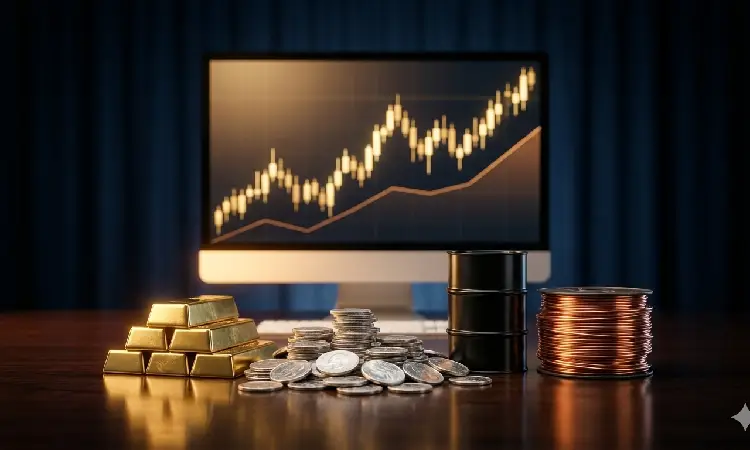
Gold prices, crude oil news and silver rallies make headlines almost every week. Many Indians already invest in physical gold, but fewer know that they can trade commodities electronically, just like stocks, on the Multi Commodity Exchange (MCX).
This beginner’s guide to commodity trading on MCX explains how it works, what you can trade, the key risks and how to get started responsibly.
What is commodity trading?
Commodity trading means buying and selling contracts based on raw materials such as gold, silver, crude oil, natural gas and base metals. In India, most retail commodity trading happens through futures and options contracts on MCX.
You are usually not buying physical gold or oil. You are trading a contract whose price follows the underlying commodity. Most traders close their positions before expiry and settle the profit or loss in cash.
What is MCX?
MCX is India’s largest commodity derivatives exchange and is regulated by SEBI. It offers contracts in bullion, energy and base metals, among other segments.
One feature that attracts working professionals is the trading timing. Most non-agricultural contracts on MCX trade from the morning until late at night, so you can trade energy and bullion after office hours. Check the exact timings on the MCX website, as they change with international market seasons.
Popular commodities for beginners
Gold
Gold is the most familiar commodity for Indian investors. Its price is influenced by global interest rates, the US dollar, inflation, central bank buying and geopolitical tension. MCX offers smaller “mini” and other reduced-size gold contracts, which need less capital.
Silver
Silver follows gold to some extent but is more volatile, because it also has heavy industrial demand. Bigger moves mean bigger opportunities and bigger risks.
Crude oil
Crude oil reacts to OPEC decisions, global demand, inventories and geopolitical events. It is one of the most actively traded commodities on MCX and can move sharply in a single session.
Natural gas and base metals
Natural gas is highly volatile and weather-sensitive. Base metals such as copper, zinc and aluminium are linked to industrial demand and global economic growth.
Commodity trading vs stock trading
| Feature | Commodity trading (MCX) | Stock trading (NSE/BSE) |
| What you trade | Futures and options on commodities | Company shares and equity derivatives |
| Main price drivers | Global supply, demand, dollar, geopolitics | Company earnings, sector trends, economy |
| Trading hours | Morning until late night for most non-agri contracts | 9:15 am to 3:30 pm |
| Leverage | Built in through futures margin | Available in F&O, not in delivery |
| Holding long term | Contracts expire, so positions must be rolled over | Shares can be held for years |
Key terms every commodity trader should know
- Lot size: the fixed quantity in one contract. It differs for each commodity and variant.
- Margin: the amount blocked to take a position, a fraction of the full contract value.
- Expiry: the date a contract ends. Traders roll over to the next contract if they want to stay in.
- Mark-to-market: daily settlement of profits and losses on open positions.
- Tick size: the minimum price movement for a contract.
How to start commodity trading: step by step
- Open a trading account with commodity segment access. Most brokers let you activate the commodity segment with your existing account.
- Learn contract specifications. Check lot size, margin, tick size and expiry for each contract on MCX.
- Start with smaller contracts. Mini or micro variants reduce the capital at risk.
- Follow global cues. Track the US dollar, international gold and crude prices and major economic data.
- Use technical analysis. Commodity charts respond well to trend, support and resistance tools. Our MACD crossover guide and volume analysis guide are good starting points.
- Fix your risk per trade. Leverage makes discipline essential. Follow the 1% risk rule.
Risks of commodity trading
Commodity trading carries real risk, especially for beginners.
- High leverage: small price moves can cause large gains or losses relative to your margin.
- Overnight and global risk: prices react to international events at any time.
- Volatility: crude oil and natural gas can move sharply within minutes.
- Rollover costs: holding positions across expiries adds cost and complexity.
Like equity derivatives, commodity futures reward preparation and punish impulsive trading. Read why 9 in 10 F&O traders lose money to understand the behaviours to avoid.
Is commodity trading right for you?
Commodity trading may suit you if you want to trade outside regular stock market hours, are interested in global macro events and are comfortable with volatility. It may not suit you if you want low-risk, long-term wealth creation. For that, diversified equity investing is often more suitable.
Frequently asked questions
Is commodity trading good for beginners?
It can be, if you start small, learn contract details and follow strict risk management. Mini contracts help reduce risk while you learn.
Can I trade commodities after office hours?
Yes. Most non-agricultural commodity contracts on MCX trade until late evening, which suits working professionals.
Is MCX regulated?
Yes. MCX is regulated by SEBI, the same regulator that oversees the stock market.
How much money do I need to start commodity trading?
It depends on the contract and its margin. Smaller variants of gold, silver and crude need much less capital than full-size contracts.
Is there a NISM certification for commodities?
Yes. NISM Series XVI covers commodity derivatives. See which NISM certification to take first.
Learn commodity trading with expert guidance
Commodity trading on MCX opens up gold, silver, crude and more to everyday traders. With the right knowledge and discipline, it can become a valuable part of your trading skill set. Upside’s Commodity Market course covers MCX contracts, analysis and risk management through classroom training at Dadar and Thane. Explore our courses or read about intraday and swing trading.