Call and Put Options Explained: Meaning, Examples and Payoffs for Beginners
Call and put are the two building blocks of every options strategy in India, from a simple Nifty trade to a complex iron condor. Yet many beginners trade them without knowing what they actually own.
This guide explains call and put options in plain language, with rupee examples, payoff tables and the risks SEBI wants every trader to understand.
What Is an Option?
An option is a contract that gives the buyer a right, but not an obligation, to buy or sell an asset at a fixed price (the strike price) on or before a fixed date (expiry). The buyer pays a premium for this right. The seller receives the premium and takes on the obligation.
In India, index options like Nifty and Sensex are cash-settled, while stock options are physically settled at expiry. Learn the key terms in our FAQs on strike price and lot size.
What Is a Call Option?
A call option gives the buyer the right to buy at the strike price. You buy a call when you expect the price to rise.
Example: A stock trades at ₹1,000. You buy a ₹1,000 call for a premium of ₹30.
| Stock price at expiry | Call value | Your profit/loss per share |
|---|---|---|
| ₹950 | ₹0 | −₹30 (premium lost) |
| ₹1,000 | ₹0 | −₹30 |
| ₹1,030 | ₹30 | ₹0 (breakeven) |
| ₹1,080 | ₹80 | +₹50 |
Breakeven for a call = strike + premium = ₹1,030.
What Is a Put Option?
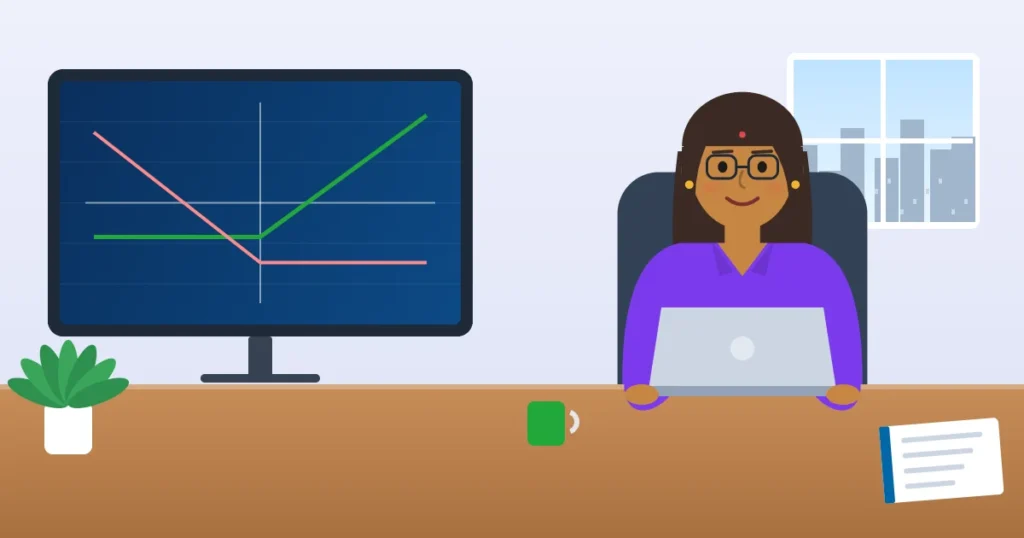
A put option gives the buyer the right to sell at the strike price. You buy a put when you expect the price to fall, or to protect shares you already own.
Example: The same stock at ₹1,000. You buy a ₹1,000 put for ₹25.
| Stock price at expiry | Put value | Your profit/loss per share |
|---|---|---|
| ₹1,050 | ₹0 | −₹25 (premium lost) |
| ₹1,000 | ₹0 | −₹25 |
| ₹975 | ₹25 | ₹0 (breakeven) |
| ₹920 | ₹80 | +₹55 |
Breakeven for a put = strike − premium = ₹975.
Call vs Put: Side-by-Side
| Call option | Put option | |
|---|---|---|
| Buyer’s right | To buy | To sell |
| Buyer’s view | Bullish | Bearish or hedging |
| Buyer’s max loss | Premium paid | Premium paid |
| Seller’s view | Neutral to bearish | Neutral to bullish |
| Seller’s max loss | Unlimited (in theory) | Large (strike − premium) |
The Four Basic Positions
- Long call: buy a call; bullish, limited risk.
- Short call: sell a call; neutral to bearish, high risk unless covered. A covered call limits it by holding the shares.
- Long put: buy a put; bearish, or insurance for a portfolio. See hedging in the stock market.
- Short put: sell a put; neutral to bullish, large downside risk.
ITM, ATM and OTM in One Line Each
- In the money (ITM): the option has intrinsic value (call strike below price, put strike above price).
- At the money (ATM): strike is near the current price.
- Out of the money (OTM): no intrinsic value, only time value. OTM options are cheap for a reason: most expire worthless.
Time value shrinks every day, which our guide to theta decay in options explains in detail.
What Moves a Call or Put Price?
- Underlying price: calls rise as price rises; puts rise as price falls.
- Time to expiry: less time means less value for both.
- Volatility: higher expected volatility raises both call and put premiums.
These effects are measured by the option Greeks.
The Risk Reality in 2026
Options look cheap, which is why beginners love them. SEBI’s FY26 study found that 87.7% of individual equity-derivatives traders lost money and that options caused about 92% of retail losses. SEBI has also tightened rules on weekly expiries and contract sizes; read SEBI’s 2026 F&O overhaul explained. The lesson is not “never trade options” but “learn first, size small and always know your maximum loss”.
Frequently Asked Questions
What is a call and put option in simple words? A call gives you the right to buy at a fixed price; a put gives you the right to sell at a fixed price. You pay a premium for either right.
When should I buy a put option? When you expect the price to fall, or when you want to protect shares you hold from a fall.
Can I lose more than the premium when buying options? No. A buyer’s maximum loss is the premium paid. Sellers can lose much more.
What is the difference between futures and options? Futures are an obligation for both sides; options give the buyer a right without obligation. See our futures vs options FAQ.
Are call and put options good for beginners? Only after structured learning and paper trading. Start with small, defined-risk positions.
Conclusion
Calls profit when prices rise, puts when prices fall, and buyers can never lose more than the premium. Sellers earn the premium but take on bigger risk. Before you trade either, learn payoffs, Greeks and position sizing. Our Options & Futures course covers 24+ strategies with live practice, and our guide to NISM Series VIII helps if you want a derivatives career. Want to see how we teach? Book a free demo class at our Dadar or Thane branch, or call +91 99304 40999.
Disclaimer: This article is for education only and is not investment advice. F&O trading involves high risk.