Why Most Traders Fail and the Professional Way to Avoid It
Introduction
Trading is one of the most exciting income opportunities today, attracting students, professionals, and aspiring investors alike. However, while entering the market has never been easier, finding success remains a challenge for many. Statistics often show that a large majority of beginners fail within their first year.
The reason? Most step in without a clear understanding of market mechanics. To avoid trading losses, you must move beyond “luck” and follow a disciplined, structured path. This is where professional stock market training makes the difference between a short-term gamble and a long-term career.
Why Do Most Traders Fail?
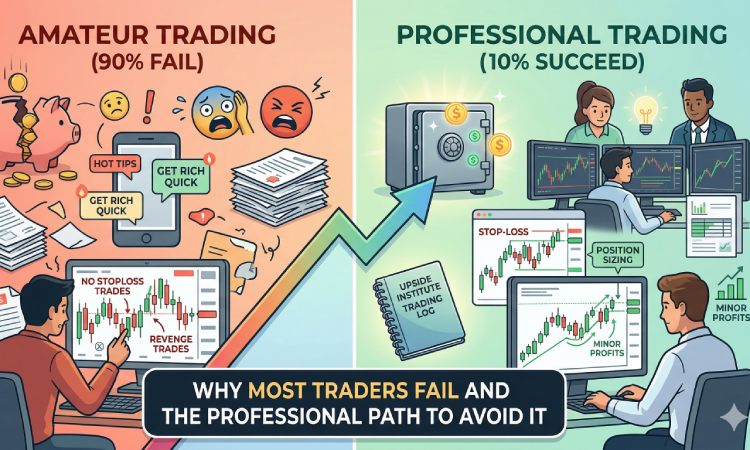
Success in the markets isn’t about being “smart”; it’s about being disciplined. Most failures stem from:
- Lack of Proper Knowledge: Trading without understanding fundamental analysis or technicals is like driving blindfolded.
- No Trading Strategy: Random buying and selling based on “feelings” rarely leads to consistent profits.
- Poor Risk Management: Ignoring stop-losses can lead to one bad trade wiping out weeks of gains.
- Emotional Trading: Fear and greed cause traders to exit winners too early and hold losers too long.
- Overtrading: Taking too many trades increases costs and reduces focus.
Common Mistakes Beginners Make
Many newcomers enter with the wrong mindset. If you recognize these habits, it’s time to pivot:
- Following Tips Blindly: Relying on Telegram or WhatsApp “calls” instead of learning the logic.
- Expecting Quick Profits: The “get rich quick” mindset is the fastest way to go broke.
- Ignoring Market Analysis: Skipping your homework and trading without research leads to poor execution.
- Trading Without Practice: Risking real money before practicing on a simulator or understanding candlestick patterns.
How to Protect Your Capital and Succeed
The transition from a failing trader to a successful one happens when you implement these four pillars:
1. Learn Before You Trade
Build a foundation. Understand how the NSE and BSE function and what moves stock prices.
2. Practice Strict Risk Management
Always define your risk before entering a trade. Use position sizing to ensure no single loss hurts your overall portfolio.
3. Focus on Consistency over “Big Wins”
Aim for steady, small gains. This builds the “trading muscle” and mindset needed for high-stakes markets.
4. Control Your Emotions
Successful traders operate like machines. They follow a plan, not their heart. This is a core part of professional stock market training.
Stop Guessing, Start Learning with Upside Institute
For those tired of inconsistent results, Upside Stock Market Institute offers a bridge to professionalism. We don’t just teach theory; we focus on learning by doing.
- Hands-on Market Practice: Observe real-time price action and execute strategies in live conditions.
- Expert Mentorship: Our mentors help you identify your emotional triggers and fix your technical errors.
- Flexible Learning: Join our share market classes in Mumbai or learn from home via our online modules.
Whether you are a student exploring career opportunities or a professional seeking a second income, a structured path is your best defense against market volatility.
Conclusion
Failure in trading is common, but it is not unavoidable. By replacing guesswork with a disciplined strategy and expert guidance, you can significantly reduce your risk. The market rewards those who are prepared. Are you?
Frequently Asked Questions (FAQs)
1. Why do 90% of traders fail? Mainly due to a lack of a structured plan, poor emotional control, and zero risk management.
2. Can I start trading with a small amount? Yes, but you should prioritize learning over earning in the beginning.
3. Is professional training worth it? Absolutely. It helps you avoid the “beginner mistakes” that usually cost more than the price of a course.
4. Where can I find the best stock market classes in Mumbai?Upside Stock Market Institute is a leading choice for practical, mentor-led training.