
Trading vs. Investing: Which Strategy is Right for You?
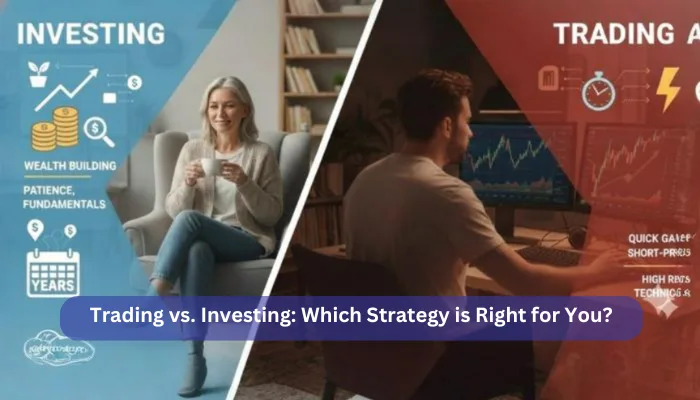
If you’re just starting your stock market journey, you’ve probably heard the terms “trading” and “investing” used interchangeably. While both involve buying and selling assets, they are as different as a marathon and a sprint.
Understanding the difference between trading and investing is the first step toward financial success. By the end of this guide, you’ll know the mindset, risk levels, and strategies required for each so you can choose the path that fits your goals.
1. What is Investing?
Investing is the “Buy and Hold” approach. It involves buying assets like stocks, mutual funds, or ETFs and holding them for the long term—usually years or even decades.
The goal of investing is wealth creation through the power of compounding. Investors don’t worry about daily price fluctuations; they focus on the company’s “health” using Fundamental Analysis. To master this, many beginners start with a professional fundamental analysis course to learn how to evaluate a company’s true value.
- Mindset: Passive and patient.
- Goal: Long-term growth and regular dividends.
- Analysis: Researching company earnings, management quality, and growth potential.
2. What is Trading?
Trading is the “Buy and Sell” approach. Traders buy and sell financial instruments frequently—within minutes, hours, or weeks—to profit from short-term price movements.
Unlike investors, traders rely heavily on Technical Analysis. They study charts and patterns to predict where the price will move next. If you want to trade professionally, enrolling in a structured technical analysis course is essential to learn how to read market signals accurately. Because of the speed, trading carries a higher risk but offers the potential for faster returns.
3. Trading vs. Investing: The Key Differences
| Factor | Investing | Trading |
| Time Frame | Long-term (Years) | Short-term (Days/Weeks) |
| Goal | Build wealth gradually | Earn quick profits |
| Analysis Type | Fundamental Analysis | Technical Analysis |
| Risk Level | Moderate | High |
| Returns | Stable & Compounded | Volatile & Unpredictable |
| Involvement | Passive (Low time) | Active (Time-consuming) |
4. Pros and Cons
Pros of Investing
- Compounding: Your money makes money over time.
- Lower Stress: You don’t need to watch the screen all day.
- Goals: Ideal for long-term targets like retirement.
Pros of Trading
- High Returns: Potential to grow capital quickly.
- Active Engagement: Regular opportunities to earn from market movements.
5. Common Mistakes Beginners Make
Whether you choose to trade or invest, you must avoid common trading mistakes beginners make, such as:
- Mixing Styles: Buying a stock for a trade, and then “becoming an investor” because the price dropped.
- Overtrading: Taking too many trades without a clear signal.
- Ignoring Risk: Not using a stop-loss when trading.
6. Conclusion: Which is Easier?
For most beginners, investing is easier to start with because it requires less real-time monitoring. Trading requires high-quality skills and quick decision-making. For those looking for a complete career path, an advanced diploma in stock market covers everything from basic trading to professional portfolio management.
Success in the stock market doesn’t come from luck—it comes from knowledge, discipline, and strategy.
People Also Ask
Yes! Many people maintain a long-term retirement portfolio while using a separate account for short-term trading.
Trading is generally considered higher risk because short-term price movements are more volatile.
No. You can start small and build experience gradually as you learn the mechanics of the market.
Trading is only gambling if you lack a strategy. Professionals use technical data to put the odds in their favor.
Investing is great for learning compounding early, while trading is excellent for learning market behavior if you have time to study.