
Intraday Trading for Beginners – Complete Guide
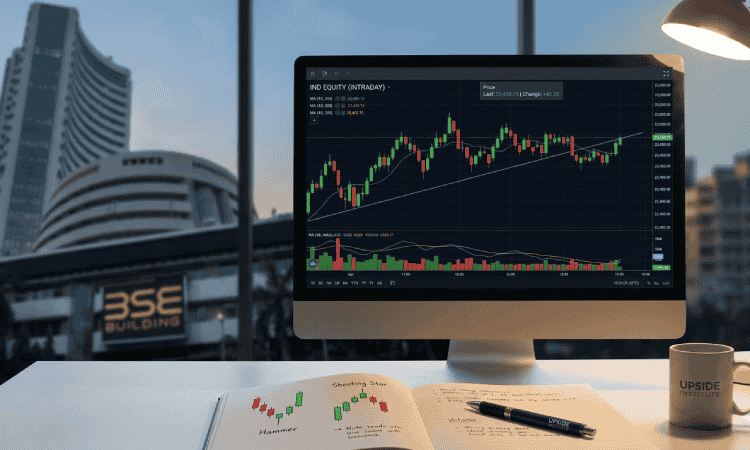
Intraday trading has gained significant attention as more individuals explore opportunities to participate actively in the stock market. The idea of earning profits within a single trading day attracts many beginners, but it also comes with challenges that require proper knowledge and discipline.
Without a clear understanding of market behavior, risk management, and trading strategies, beginners may find it difficult to achieve consistent results. In this guide, you will understand intraday trading for beginners, how to start your journey, and what to look for in a reliable intraday trading course in Mumbai.
What is Intraday Trading?
Intraday trading refers to the process of buying and selling stocks within the same trading day. Traders take positions in the market and close them before the bell rings, ensuring that no trades are carried forward to the next day.
In intraday trading, the main objective is to take advantage of small price movements that occur during market hours. There is no overnight position, as traders aim to earn quick profits based on short-term market fluctuations. However, success requires fast decision-making and disciplined execution. To master this, many professionals start by learning the basics of candlestick formations to predict price action.
How Intraday Trading Works
- Use of Trading Platforms: Traders use online brokers to place orders. These platforms offer real-time price data, charts, and technical indicators.
- Order Types (Market & Limit):
- Market Order: Executes instantly at the current market price.
- Limit Order: Executes only at a specific price set by the trader.
- Importance of Timing: Since price movements happen quickly, traders must enter and exit positions at the right moment to capture profits.
Key Skills Required for Intraday Trading
- Technical Analysis: Understanding price movements using indicators and trends is essential. If you are serious about results, enrolling in a dedicated technical analysis course is a game-changer.
- Chart Reading: You must know how to identify support and resistance levels to make accurate entry decisions.
- Risk Management: Protecting capital is more important than making profits.
- Emotional Discipline: Controlling fear and greed prevents impulsive decisions that lead to “revenge trading.”
Common Mistakes Beginners Must Avoid
- Overtrading: Taking too many trades reduces focus. Quality over quantity is the mantra.
- No Stop-Loss: Trading without a stop-loss is like driving without brakes. For more tips on what to avoid, check out our guide on 9 common trading mistakes.
- Following Tips Blindly: Relying on social media “calls” is risky. Always make informed decisions based on your own strategy.
Risk Management: The Secret to Longevity
- Stop-Loss: A predefined level where a trade is automatically exited to limit losses.
- Position Sizing: Deciding how much capital to allocate to a single trade. Never put all your eggs in one basket.
- Risk-Reward Ratio: A good trade should have a favorable ratio (e.g., risking ₹1 to earn ₹2). This ensures that even if you are right only 50% of the time, you remain profitable.
The Role of Professional Training
While self-learning is possible, intraday trading requires more than just basic knowledge. Without proper guidance, beginners often struggle with execution and consistency. A structured curriculum provides a step-by-step path from basics to advanced strategies.
Learn with Upside Stock Market Institute
Professional training institutes like Upside focus on practical, result-oriented learning. If you are looking for the best share market classes in Mumbai, Upside offers:
- Real-time strategy execution during market hours.
- Personal mentorship and doubt-solving sessions.
- A strong focus on risk management and trading discipline.
- Preparation for professional certifications like the NISM exam.
Conclusion
Intraday trading is a skill-based activity that depends on knowledge and discipline rather than luck. For beginners, it is important to start small and focus on consistent learning. Choosing the right training method can significantly accelerate your growth toward financial freedom.
Frequently Asked Questions (FAQs)
1. Is intraday trading suitable for beginners? Yes, provided they start with a demo account or small capital and follow a strict risk management plan.
2. How much money is required for intraday trading? You can start with a small amount. It is advisable to increase your capital only as your win rate improves.
3. Is intraday trading risky? Yes, due to volatility. However, using tools like stop-loss helps manage that risk effectively.
4. What is the best time for intraday trading? The first 90 minutes (9:15 AM to 10:45 AM) and the last hour of the market usually offer the best liquidity and movement.